Home » Oven Guides & Advice » How long does an oven take to cool down? (safety guide)
How Long Does an Oven Take to Cool Down? A Safety Guide
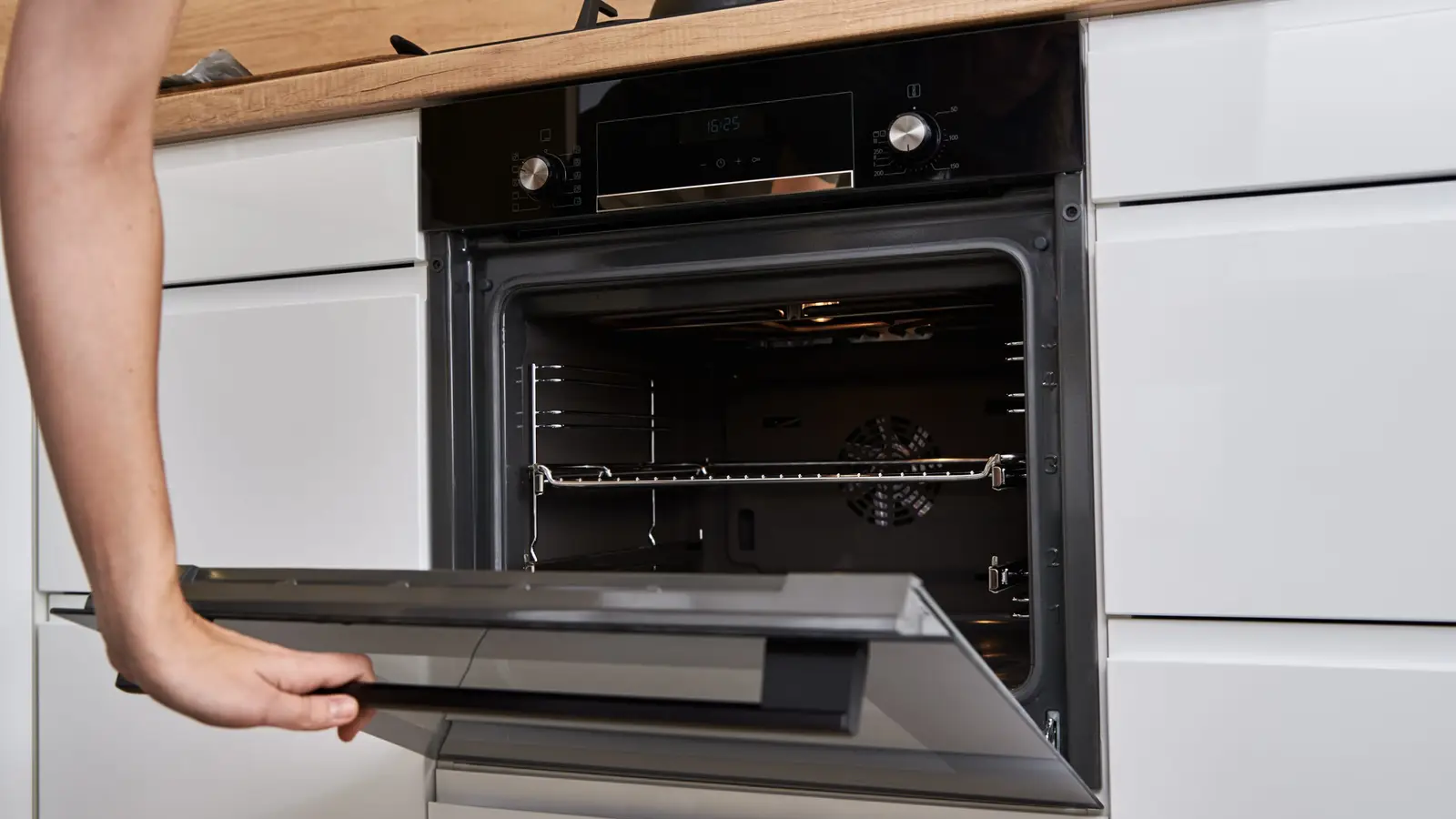
Your oven holds a surprising amount of heat long after you switch it off. Knowing roughly how long it takes to cool, and how to stay safe while it does, helps you avoid burns, protect curious children and pets, and look after your appliance.
The quick answer
Most ovens take around 30 to 90 minutes to cool to a safe-to-touch temperature after they are switched off. The interior, door glass and metal surfaces can stay warm for a couple of hours beyond that. How long it actually takes depends on how hot the oven got, how well it is insulated, and whether the door is left open or closed.
If you have just finished cooking at a normal temperature, the outside of a well-insulated oven will usually feel cool to the touch within an hour. The cavity itself takes longer, which is why it can still gently warm a plate or finish resting a joint of meat well after the dial is turned to off.
What affects cool-down time
No two cool-downs are exactly the same. The main things that decide how quickly your oven loses heat are:
- Peak temperature. An oven that hit 240 degrees C for a pizza takes noticeably longer to cool than one that gently warmed bread at 140 degrees C.
- Insulation quality. Better insulation keeps heat in for cooking efficiency, which means the cavity releases it more slowly once you finish.
- Door open or closed. An open door lets heat escape faster, but it also pushes that heat straight out into the kitchen at face and hand height.
- Cooling fan. Many ovens run an internal fan after switch-off that helps draw heat away from the controls and electronics.
- Room temperature and ventilation. A warm, closed kitchen slows cooling, while a cooler, well-ventilated room speeds it up.
- Oven size and build. Larger cavities and heavier metal components hold more heat and take longer to release it.
Cool-down times by oven type
The figures below are general guidance for an oven used at typical cooking temperatures, not exact timings. They also depend on the settings you cook with, which our guide to oven functions explained breaks down in full. Treat them as a starting point and always check before you touch.
| Oven type | Safe to touch | Fully cool |
|---|---|---|
| Standard electric | Around 45 to 60 minutes | About 2 hours |
| Fan (convection) | Around 30 to 45 minutes | About 90 minutes |
| Gas | Around 30 to 60 minutes | About 2 hours |
| Pyrolytic after a self-clean cycle | Around 60 to 90 minutes or more | 2 to 3 hours |
Times are approximate and depend on temperature reached, insulation and room conditions.
Staying safe while your oven cools
The cool-down window is when most kitchen burns happen, because the oven looks finished even though its surfaces are still hot. The kitchen is one of the most hazardous rooms in the home for young children, as RoSPA points out, so a cooling oven deserves the same caution as one in use. A few simple habits keep everyone safe.
Do
- Keep children and pets away until surfaces are confirmed cool
- Use oven gloves for anything you remove during cooling
- Let the cooling fan finish its cycle on its own
- Leave the door closed if young children are nearby
- Treat the door glass and handle as hot until proven otherwise
Avoid
- Leaving the door open to heat the kitchen
- Touching the cavity, racks or glass to test the heat
- Draping tea towels over a hot handle or near vents
- Wiping out the interior before it has cooled
- Unplugging the oven just to stop the fan running
If a burn does happen, the NHS advises holding the affected area under cool running water for around 20 minutes and never applying ice, creams or greasy substances like butter. Seek medical help for anything more than a small, superficial burn.
Why the cooling fan keeps running
A fan running after you switch off is completely normal. It protects the controls, display and surrounding cabinetry from residual heat, and it usually stops by itself once the oven has cooled enough. Letting it run for 10 to 30 minutes is expected, so there is no need to switch off at the wall to silence it.
If the fan runs for much longer than usual, keeps cycling on and off for hours, or starts making an unfamiliar noise, that is worth looking into rather than ignoring. It is the same fan you should confirm is working when you first install a built-in oven, so a clear change in how it sounds is worth noting. It may simply be a hot kitchen, but a persistent change in behaviour can be a sign the appliance needs a check.
Self-cleaning and pyrolytic ovens
Pyrolytic ovens deserve extra care. During a self-clean cycle the cavity heats to around 400 to 500 degrees C to burn off residue, which is far hotter than normal cooking. For a full breakdown of the different systems and how the cycle works, see our guide to how self-cleaning ovens work. Because of that intense heat, the door locks automatically and will not release until the oven has cooled to a safe level.
After the cycle ends, expect to wait roughly 60 to 90 minutes, sometimes longer, before the lock disengages and you can open the door. Never try to force it. Once it opens, the cavity and glass can still be warm, so give it a little more time before wiping away the fine ash left behind.
Key takeaways
- Most ovens reach a safe-to-touch temperature in around 30 to 90 minutes, with full cooling taking up to a couple of hours.
- Higher cooking temperatures, better insulation and a closed door all slow cooling down.
- Keep children and pets clear, and never leave the door open to warm the room.
- A cooling fan running after switch-off is normal and should be allowed to finish.
- Pyrolytic ovens stay locked after self-cleaning until they cool, often 60 to 90 minutes or more.
Frequently asked questions
It is best avoided. An open door releases a rush of hot air at hand and face height, raises the burn risk for anyone passing by, and is a particular hazard around children and pets. Let the oven cool with the door closed and ventilate the room another way instead.
If the oven has a temperature display, wait until it reads a normal room temperature. Otherwise, carefully hold the back of your hand a short distance from the door glass without touching it. If you feel warmth radiating, give it more time. Only test surfaces directly once you are confident the heat has gone.
This is the cooling fan doing its job. It draws heat away from the controls and surrounding units, and it switches off automatically once the oven has cooled enough. Running for 10 to 30 minutes is normal, so there is no need to turn off the power to stop it.
A cooler, well-ventilated kitchen will help it cool a little faster, and letting the cooling fan run uninterrupted makes a difference. Beyond that, it is safest to let the oven cool naturally rather than opening the door wide or placing anything cold against hot surfaces.
Pyrolytic ovens keep the door locked until they have cooled to a safe level, usually around 60 to 90 minutes after the cycle finishes, sometimes longer. Wait for the lock to release on its own and never try to force the door open early.
For a short while, yes. A switched-off oven holds gentle warmth that can rest meat or keep plates warm for a few minutes. It is not a substitute for proper hot holding, though, so do not rely on it to keep food at a safe temperature for long periods.
Explore More Kitchen Advice & Buying Guides
Browse our latest articles covering appliance tips, energy-saving advice, and expert guidance – designed to help you choose, use, and get the most from your kitchen appliances.