How to Cook Delicate Sauces on an Induction Hob Without Burning
Hollandaise that splits, béchamel that catches, custard that scrambles — these are the sauces that make even experienced cooks nervous. Induction hobs are actually the best tool available for delicate sauce work, because they respond instantly when you reduce the heat and can hold a genuine low simmer that gas and ceramic struggle to sustain. The key is understanding how to use that precision rather than cooking with induction the same way you cooked with gas.
Why Induction Helps with Delicate Sauces
The fundamental challenge with delicate sauces — béchamel, hollandaise, custard, chocolate ganache, cheese sauce — is that they contain proteins, emulsions, or starches that break down irreversibly above a certain temperature. Egg proteins in hollandaise start denaturing around 65°C. Cheese sauce splits when overheated because the proteins contract and squeeze out the fat. Chocolate seizes if it gets too hot or comes into contact with even a small amount of water at the wrong moment.
On a gas hob, the lowest flame still produces a significant amount of heat, and turning it down further does not give you a proportionally lower temperature — the gas either stays lit or goes out. On ceramic, turning the dial down reduces power to the element, but the element’s thermal mass means it stays hot for minutes after you reduce the setting, continuing to cook the sauce while you are trying to cool it. Induction does neither of these things. The coil’s electromagnetic field reduces within fractions of a second of a power level change, and the pan cools accordingly. The precision is what saves sauces.
Most induction hobs also have a dedicated simmer or keep-warm function — typically a setting labelled 1 or “S” that holds the pan at a temperature just below simmering. For a sauce you have already made and want to hold without further cooking, this is invaluable. It is the equivalent of having a professional-kitchen hot plate built into your hob.
For a broader introduction to using your induction hob effectively, see the ultimate induction hob beginner’s guide.
Sauce-by-Sauce Settings Guide
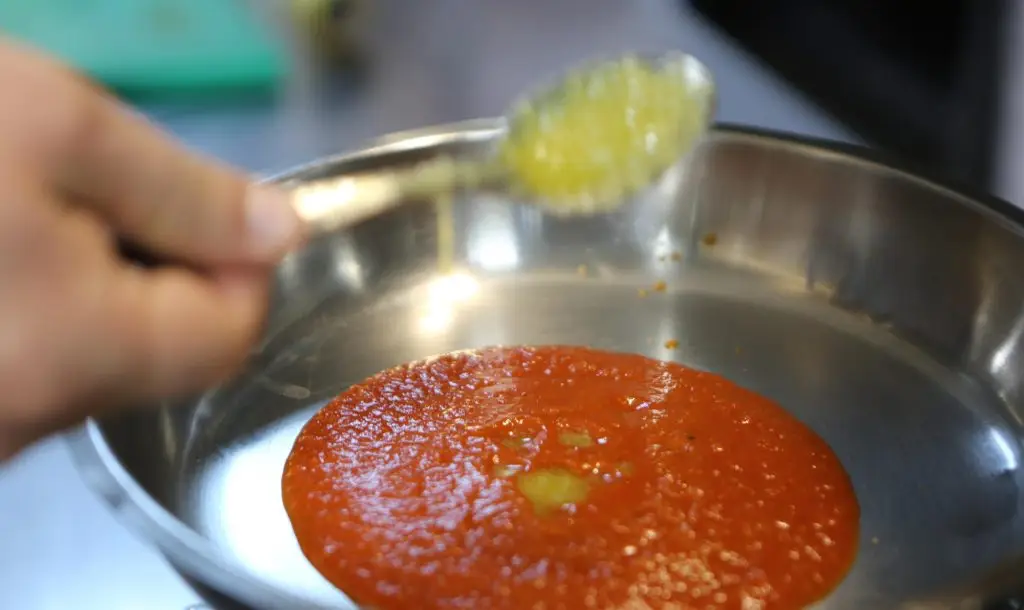
Different sauces have different tolerance for heat. The table below covers the most common delicate sauces with recommended settings, the specific reason each one is sensitive, and the technique that protects it.
| Sauce | Heat level | Why it is sensitive | Key technique |
|---|---|---|---|
| Béchamel | Medium-low (3–4) | Starch can lump if heat is uneven; milk can scorch on the base of the pan | Whisk continuously as the sauce thickens; add warm milk not cold |
| Hollandaise | Lowest (1–2) or bain-marie | Egg yolks begin to scramble above 65°C — even a few seconds of excess heat is irreversible | Use a bain-marie for maximum protection; whisk constantly; remove from heat if it feels too hot to touch the base of the bowl |
| Custard | Very low (2–3) | Egg proteins scramble quickly; should never boil | Stir constantly with a wooden spoon; pull off heat the moment the custard coats the back of the spoon |
| Cheese sauce | Low (2–3) once béchamel is made | Cheese added to an overheated base splits — fat separates from protein | Remove from heat before adding cheese; add in small handfuls off direct heat; stir to melt |
| Chocolate ganache | Very low (1–2) | Chocolate seizes if overheated or if any water enters at the wrong temperature | Melt over the lowest setting with cream already in the pan; stir gently — do not whisk |
| Butterscotch / caramel | Medium-low (3–4), then reduce | Sugar continues cooking rapidly by thermal momentum — the pan stays hot long after reducing heat on other hob types | On induction, reduce power immediately when the target colour is reached — the instant response is an advantage here |
Technique: Pan Choice, Temperature, and Timing
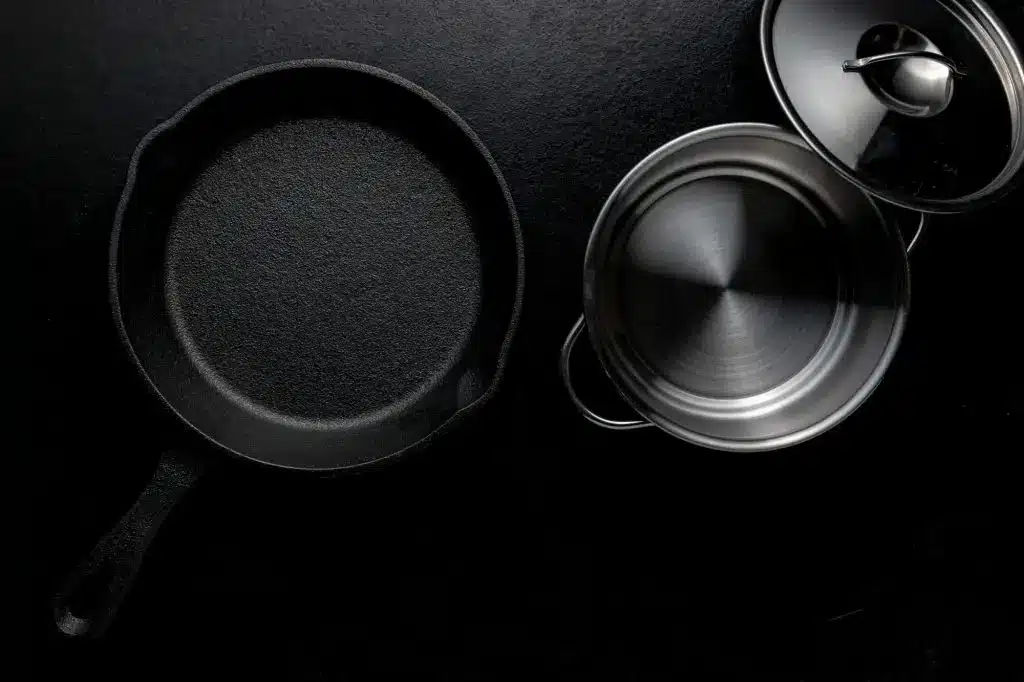
Choose a heavy-based pan
A thin-based pan concentrates heat at the point of contact with the coil and creates hot spots — precisely what delicate sauces cannot tolerate. A heavy-based pan (thick stainless steel, enamelled cast iron, or a quality tri-ply pan) distributes heat across the full base evenly. The additional thermal mass also acts as a buffer against sudden temperature spikes. For induction compatibility, ensure the base passes the magnet test — see the guide to induction-compatible cookware for a full material guide.
Start lower than you think you need
The most common cause of a broken sauce is starting too hot. Begin at a power level you know is too low, then increase incrementally. It takes an extra two or three minutes but removes the risk of overheating. Induction increases temperature as quickly as you can adjust the dial — the opposite risk does not really exist.
Warm your liquid before adding it
Adding cold milk to a béchamel roux, or cold cream to a ganache, causes a sudden temperature drop that can cause lumping or seizing. Warm milk to roughly the same temperature as the roux before adding it, and add it gradually, whisking to incorporate before adding more. The same principle applies to butter in hollandaise — use butter that is warm but not clarified and add it in a thin stream rather than all at once.
Use the bain-marie for the most sensitive sauces
A bain-marie (bowl sitting over a pan of barely simmering water) puts an extra thermal buffer between the heat source and the sauce. Even with induction’s precise control, hollandaise and custard are safer this way — the water temperature caps at 100°C and the bowl temperature will never exceed that, giving you a significant margin of safety against overheating.
Never walk away
The advantage of induction’s instant response is wasted if you are not watching the sauce. Hollandaise can go from perfect to scrambled in under thirty seconds of neglect. Stay at the hob, stir continuously, and keep your attention on the texture and behaviour of the sauce rather than the setting you have selected.
Mistakes to Avoid
- ✗Starting on a high setting and reducing. Once egg proteins have begun to scramble or a sauce has split from overheating, the damage is done. You cannot uncook scrambled egg yolks. Starting low and building up takes more time but is the only reliable method for sauces with low heat tolerance.
- ✗Adding cold ingredients to a hot sauce. Cold milk into a hot roux, cold cream into a hot caramel, or cold butter into a warm hollandaise all cause thermal shock that disrupts the emulsion or causes lumping. Bring liquids to room temperature or warm them slightly before adding.
- ✗Using a thin pan on a high-power zone. A small, thin stainless pan on a large zone at a medium-low setting can still develop hot spots at the perimeter of the coil. Use a pan whose base diameter matches the zone, and use the thickest pan available for sauce work.
- ✗Adding all the cheese at once. For cheese sauces, removing the pan from the heat before adding cheese and adding it in small handfuls allows each addition to melt smoothly. A large dump of cheese into an overheated béchamel is the most reliable way to produce a greasy, grainy result.
- ✗Treating induction like ceramic by leaving it on the same setting. On ceramic, a setting of 3 out of 9 means the element is running at roughly 33% power continuously. On induction, the coil responds instantly to any change — the same setting on different hob models may produce different temperatures depending on the coil’s wattage. Learn your specific hob’s behaviour at low settings by testing with water before cooking a sauce for the first time.
How to Rescue a Split or Broken Sauce
Remove from heat immediately. In a clean bowl, whisk one egg yolk with a teaspoon of warm water. Very slowly whisk the broken hollandaise into this new base — a few drops at a time at first, then in a thin stream. The fresh yolk re-emulsifies the broken sauce if done patiently and at room temperature.
Remove from heat. Whisk in a tablespoon of cold milk or cream vigorously. If this does not bring it back, a teaspoon of cornflour mixed with cold milk can be whisked in and the sauce returned briefly to the lowest possible heat while stirring — the cornflour stabilises the emulsion.
If caught early, vigorous whisking over low heat resolves small lumps. For a more set lump problem, pour the sauce through a fine sieve, pressing the lumps through with the back of a spoon, then return to the pan and whisk over low heat to bring back together.
Seized chocolate (a thick, grainy paste) is caused by a small amount of water contacting the chocolate at the wrong temperature. Paradoxically, adding more liquid — warm cream or warm water, a tablespoon at a time, stirring continuously — can loosen it back to a fluid state. Add cold liquid and it will seize further.
If the custard has begun to curdle but not fully scrambled, remove from heat immediately and pour into a cold bowl — this stops the cooking instantly. Blend with a stick blender to smooth out the texture. Once fully scrambled, rescue is not possible and a fresh batch is the only option.
For general induction hob technique, the complete induction hob beginner’s guide covers power settings, pan choice, and the habits that make the biggest difference to everyday results. If you are hearing unexpected sounds from the hob during low-power sauce cooking, the guide to induction hob noise explains what is normal at low settings. Browse the CATA induction hob range for models with dedicated simmer and keep-warm settings suited to delicate cooking.
Common questions answered
What power level should I use for hollandaise on induction?
Setting 1 or 2 on most hobs — the absolute lowest available. For extra protection, use a bain-marie rather than direct heat even at the lowest setting. Hollandaise is one of the few sauces where the bain-marie method is genuinely superior to any direct-heat approach, including induction at its most precise.
Can I keep a finished sauce warm on induction without it continuing to cook?
Yes — use the keep-warm or simmer function (typically marked “S” or power level 1). This holds the sauce at a temperature below simmering without further thickening or cooking it. Most sauces can be held this way for 15 to 20 minutes without any deterioration in texture.
Do I need a bain-marie for custard on induction?
Not necessarily — induction’s precise low-heat control is often sufficient for custard on a direct setting of 2 or 3. A bain-marie gives additional protection and is the safer choice if you are making custard for the first time or cannot give it your full attention. Stirring continuously is more important than whether you use a bain-marie.
Why does my sauce keep catching even on a low setting?
The most likely cause is a thin pan creating hot spots where the base contacts the coil’s strongest magnetic field. Switch to a heavier pan and match the pan diameter to the zone size — a small pan on a large zone heats unevenly at the coil edges. Also check you are stirring continuously rather than periodically.