Home » Hob Guides & Advice » Best Pans for Wok Cooking on Induction (and Alternatives)
Best Pans for Wok Cooking on Induction (and Alternatives)
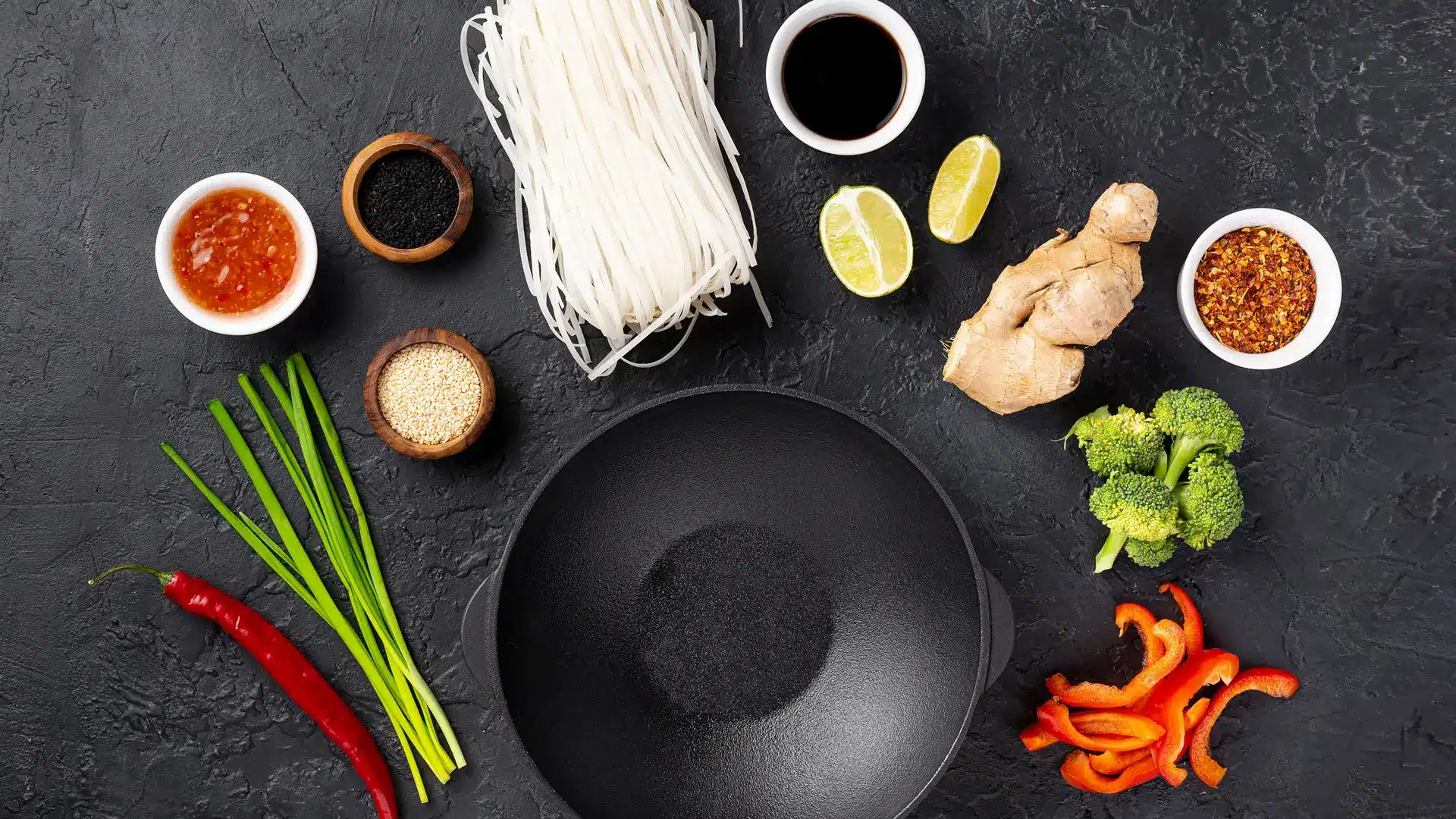
Traditional round-bottomed woks are designed for the curved bowl of a wok burner, where the flame wraps up the sides. On an induction hob, a round base makes no magnetic contact with the flat glass surface, so the coil cannot heat it. Wok rings make things worse, lifting the base even further from the coil. The solution is not to abandon wok-style cooking on induction, but to understand which pan geometry and material actually works, and why.
What the hob needs from the pan
Induction works by inducing eddy currents in a ferromagnetic base pressed flat against the glass. The larger and flatter the contact area, the more efficiently the coil transfers energy. For a wok, this means a flat-bottomed design at least 18cm across the base, large enough to engage the full coil of a standard zone. The pan should be magnetic throughout (carbon steel and cast iron both qualify), and the base should be as flat as possible. A slight concave bow in a carbon steel wok’s base, common with cheaper pans, reduces contact area and reduces heating efficiency.
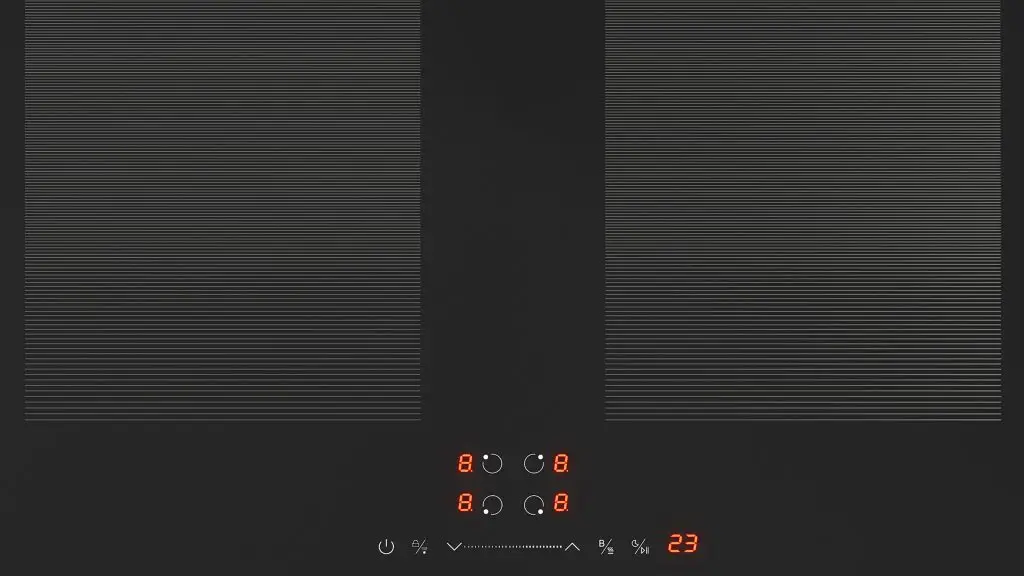
Flex zones, where two adjacent zones merge into a single larger active area, are ideal for wok cooking. A 28–32cm flat-based wok positioned over a flex zone receives heat across a wider footprint, which better approximates the all-round heat of a professional wok burner than a single round zone can.
Material comparison
| Material | Response | Wok-hei potential | Maintenance | Best use |
|---|---|---|---|---|
| Carbon steel (2–3mm) | Very fast | High — thin walls heat intensely and cool quickly | Requires seasoning; dry after washing; light oil to store | Stir-fry, fried rice, noodles, charred veg |
| Cast iron (flat-base wok or skillet) | Slower to heat | Good — holds searing temperature well once up to heat | Requires seasoning; heavy; handle gets very hot | Searing meat, one-pan meals, sustained high-heat |
| Stainless tri-ply | Medium | Moderate — even heat but lacks the intense localised hot spots of thin carbon steel | Dishwasher-safe (confirm with maker); no seasoning needed | Stir-fries with sauce, everyday high-sided cooking |
| Non-stick with induction disc | Medium | Low — coating limits maximum temperature before degrading | No seasoning; gentle cleaning only; replace when coating deteriorates | Delicate stir-fries, eggs, low-fat cooking |
For authentic wok-hei (the slightly smoky, slightly charred quality that makes restaurant stir-fry distinctive), thin carbon steel is the closest match on induction. The thin walls heat intensely and respond immediately to power changes, which lets you create the high temperature at the pan surface that wok-hei requires. Use Boost to bring the pan up to temperature, then reduce to a strong setting before adding oil and ingredients.
No wok? These alternatives work well
Getting the technique right on induction
Stir-fry sequence on induction
- Place the empty pan on the zone and activate Boost. Preheat for 60 to 90 seconds until the pan is very hot. A drop of water should skitter and evaporate immediately.
- Reduce to a strong setting (7 or 8 of 9) before adding oil. High-smoke-point oil only: groundnut, refined rapeseed, or avocado. The oil should shimmer within a few seconds.
- Add ingredients in small batches. Overloading the pan drops the temperature sharply and steams rather than fries. Cook in two or three batches for larger portions.
- Keep moving. Tossing or continuous stirring prevents sticking and maintains contact between food and the hot pan surface.
- Add sauces at the end. Liquid dropped into a very hot pan evaporates and coats rather than pooling and stewing.
Care for carbon steel and cast iron
- Season before first use: thin oil layer, heat until it smokes, cool, wipe, repeat twice
- Wash with hot water and a brush or scraper (no soap on seasoned pans)
- Dry immediately and completely; residual moisture causes surface rust
- Wipe a few drops of oil over the surface before storing
- Surface rust from neglect: scrub off with steel wool, re-season, continue
- The seasoning improves with every use. Older carbon steel pans cook better than new ones
For a full overview of induction-compatible materials and what to look for in pan bases, see what cookware materials work best on induction hobs. The guide to Power Boost explains when maximum power improves cooking results and when it overshoots. Browse CATA induction hobs for models with flex zones suited to larger wok-style cookware.
Explore More Kitchen Advice & Buying Guides
Browse our latest articles covering appliance tips, energy-saving advice, and expert guidance – designed to help you choose, use, and get the most from your kitchen appliances.