Can I Plug an Induction Hob into a Normal Socket?
For most induction hobs, no — they draw too much power for a standard 13A socket and must be hard-wired into a dedicated 32A or 40A cooker circuit. However, there is a genuine and growing exception: plug-in induction hobs specifically engineered to operate within the 13A limit. If a hob comes with a fitted UK plug and is rated at or below 3kW, it is designed for a standard socket and requires no dedicated wiring.
Why Most Induction Hobs Cannot Use a Normal Socket
A standard UK 13A socket is rated for a maximum continuous load of 3,120 watts (13A × 240V). This is sufficient for a kettle, a microwave, or a tumble dryer — but it is nowhere near enough for a full-size induction hob.
A typical four-zone induction hob draws between 6kW and 7.5kW at full power. Running all four zones simultaneously at high settings — as you might when cooking a large meal — demands a current of 25 to 31 amps. A standard 13A socket fuse would blow immediately, and attempting to draw this current from a ring circuit would overheat the wiring and create a serious fire risk. This is why UK wiring regulations require induction hobs above 3kW to be connected via a dedicated cooker circuit, installed by a qualified electrician.
Standard 13A socket limit
Maximum safe continuous load for a UK ring main socket. Suitable only for plug-in induction hobs.
Typical induction hob
Standard four-zone induction hob at full power. Requires a dedicated 32A or 40A cooker circuit.
Large multi-zone hobs
90cm six-zone and flex zone hobs at maximum load. Hard-wired circuit mandatory — no exceptions.
The Plug-In Exception — and the CATA Model That Qualifies
A small but growing category of induction hobs is engineered specifically to operate within the 13A limit. These models achieve this through a combination of a reduced maximum power output — capped at or below 3kW — and intelligent load management that prevents all zones from drawing maximum current simultaneously. They ship with a fitted 13A UK plug and require no specialist electrical installation.
CATINDE60HF — CATA 700 60cm 4 Zone Plug-In Flex Zone Induction Hob
The CATINDE60HF is CATA’s plug-in induction hob, designed for a standard 13A socket without a dedicated cooker circuit. It features four cooking zones with flex zone bridging capability, a 13A plug fitted as standard, and full induction functionality including boost, timer, and child lock — identical to hard-wired models in features, but accessible without electrical installation work.
This makes it the right choice for rental properties where rewiring is not an option, kitchens where an existing cooker circuit is unavailable, or households wanting to switch to induction without the cost and disruption of a new circuit installation. View the CATINDE60HF on the CATA website.
How to identify a plug-in induction hob
Three checks confirm whether a specific model is designed for a standard socket:
Power rating at or below 3kW. Check the product specification — the rated power or maximum consumption figure is always listed. Any figure above 3kW rules out a standard socket regardless of what any other source says.
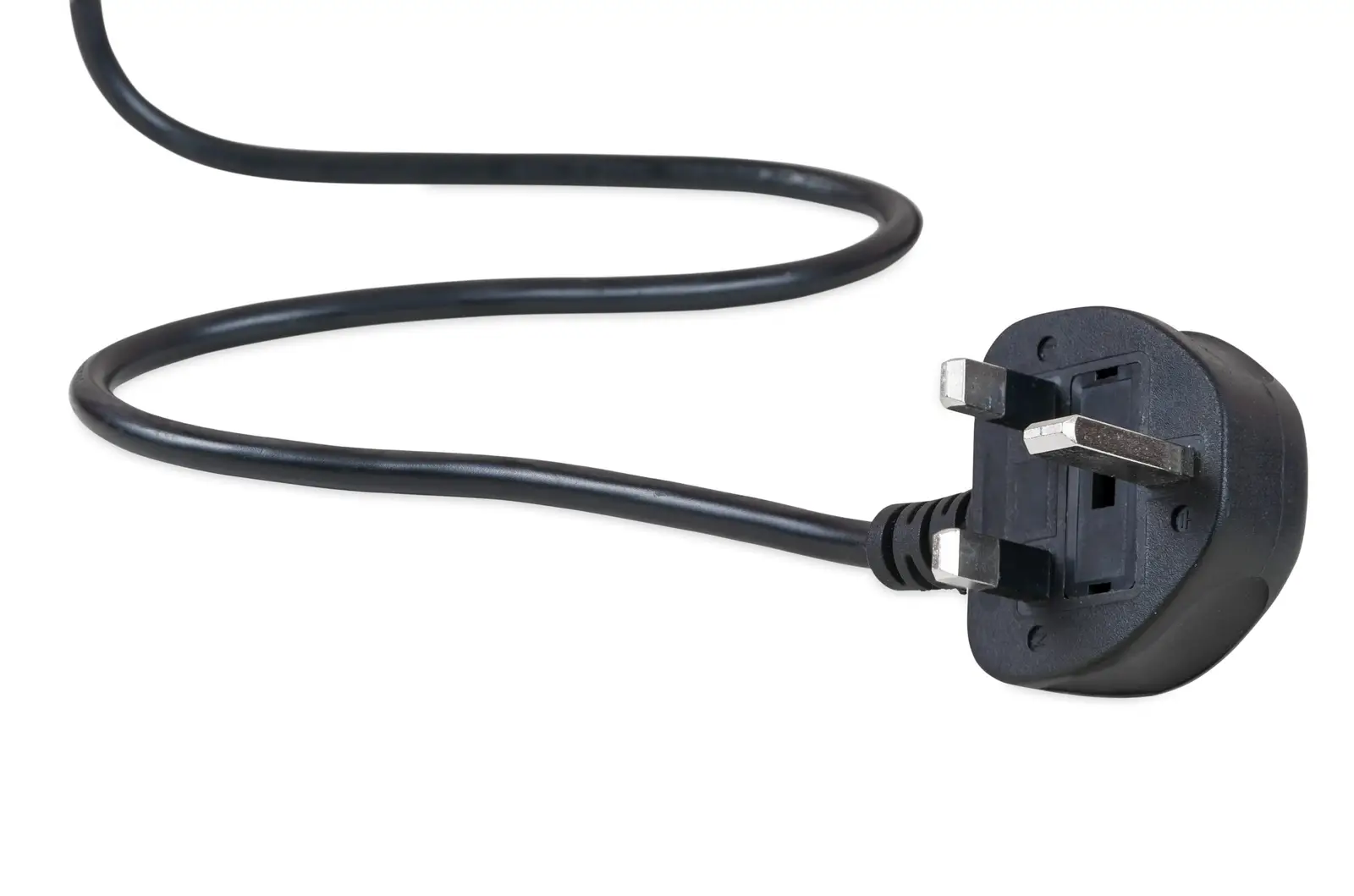
Fitted UK plug. A hob that comes with a factory-fitted 13A plug is declared by the manufacturer as socket-compatible. A hob that terminates in bare cable or a non-standard connector requires hard-wiring.
Installation guide confirms socket use. The installation instructions are the definitive reference. They will explicitly state whether a standard socket is permitted. Do not rely on assumptions — check the manual for the specific model.
Which Hob Type Needs Which Connection
Plug-in induction hob (e.g. CATINDE60HF)
Rated at or below 3kW, shipped with a fitted UK 13A plug. Plugs directly into any standard socket on a ring main. No dedicated circuit, no electrician required for connection. The socket should be on its own circuit or at minimum not sharing with other high-draw appliances — but no specialist wiring is needed.
Standard 60cm four-zone induction hob
Typically rated at 6kW to 7.2kW. Requires a dedicated 32A or 40A radial circuit from the consumer unit, terminated in a cooker connection unit or double-pole switch. Must be installed by a Part P qualified electrician and notified to building control.
90cm six-zone or flex zone induction hob
Typically rated at 7kW to 7.5kW or higher. Requires a 40A dedicated circuit. Given the higher load, the circuit cable rating and consumer unit capacity should be confirmed by an electrician before installation. Hard-wired only — no socket connection under any circumstances.
Induction hob with unknown or unconfirmed rating
If you are unsure of a hob’s power rating, check the product datasheet or the rating plate on the underside of the appliance. Do not plug any induction hob into a standard socket unless the documentation for that specific model explicitly confirms it is safe to do so.
What Hard-Wiring a Standard Induction Hob Involves
For the majority of induction hobs, a dedicated cooker circuit is the required installation. Understanding what this involves helps with planning and budgeting for a switch to induction.
Dedicated radial circuit
A separate circuit running directly from the consumer unit to the hob location — not shared with any other outlets or appliances. Typically 6mm² twin-and-earth cable rated for the load. The circuit must be protected by an appropriate MCB at the consumer unit.
Double-pole isolation switch
A cooker connection unit or double-pole switch mounted within reach of the hob provides a local isolation point. Required by wiring regulations — allows the hob to be safely isolated for cleaning or maintenance without going to the consumer unit.
Part P notification
Installing a new cooker circuit is notifiable work under Building Regulations Part P in England. The installing electrician must either self-certify (if registered with a competent person scheme such as NICEIC or NAPIT) or notify the local building control authority. This ensures the work is inspected and recorded.
Typical installation cost
A new dedicated cooker circuit installed by a qualified electrician typically costs £150 to £400 in the UK, depending on the distance from the consumer unit to the hob position and the complexity of routing the cable. This is a one-time cost and does not need repeating if the hob is replaced like for like in the same position.
For the plug-in option that avoids dedicated circuit installation entirely, the CATINDE60HF is the CATA model designed for a standard 13A socket. For kitchens with an existing cooker circuit, the full CATA induction hob range includes 60cm and 90cm models from 6kW to 7.5kW. The guide to induction-compatible cookware covers what pans work on any induction hob once it is installed.
Common questions answered
Can I just use an extension lead to plug in a standard induction hob?
No. An extension lead does not change the maximum current a 13A circuit can safely carry. Using a standard induction hob via an extension lead on a ring main is unsafe regardless of the lead’s rating, and would likely trip the circuit breaker or blow the plug fuse on first use at full power. It also poses a fire risk if attempted with a lower-rated lead.
Is a plug-in induction hob less powerful than a hard-wired one?
In terms of total maximum output, yes — a plug-in hob is capped below 3kW where a standard hard-wired hob delivers 6kW or more. In practice, a plug-in hob with four zones and flex bridging covers the full range of everyday cooking tasks. The limitation becomes most apparent when cooking large meals on multiple zones simultaneously at high settings.
Do I need an electrician to install a plug-in induction hob?
Not for the electrical connection — a plug-in hob connects to a standard socket with no specialist work. You do need the hob to be physically fitted to the worktop cutout, and any gas supply from a previous gas hob must be properly capped by a Gas Safe registered engineer before the new hob goes in. The electrical connection itself is simply plugging in.
Can I run a plug-in induction hob from any socket in the kitchen?
Any standard 13A socket on the ring main is electrically acceptable for a plug-in induction hob. For best practice, use a socket that is not simultaneously running other high-draw appliances. A socket close to the hob position is preferable to avoid trailing the flex across the kitchen — the flex supplied with plug-in hobs is typically 1.5 to 2 metres.