Why Is Grease Dripping From My Cooker Hood?
In most cases, grease drips from a cooker hood because the grease filters are saturated. Once a filter is full, it can no longer trap the oil pulled out of the air, so grease condenses on the metal and runs back down onto your hob. It is usually a maintenance issue rather than a fault, and the good news is that it is almost always fixable at home.
Quick answer
Start with the grease filters. Slide them out and check whether they feel heavy, sticky or coated. If they do, a thorough degrease usually stops the dripping straight away. Our step-by-step guide to cleaning and replacing cooker hood grease filters walks you through it. If the dripping continues after a clean, the cause is more likely how the hood is run, where it is fitted, or grease built up further inside the unit.
The Short Answer
A cooker hood works by pulling warm, grease-laden air off your hob and passing it through metal filters that capture the oil droplets. Over weeks and months, those filters gradually fill with grease. When they reach capacity, fresh grease has nowhere to go, so it collects on the underside of the filter and the canopy and eventually drips back down.
That is why the first thing to check is nearly always the filters. But a few other factors can cause or worsen the problem, from the speed you run the hood at to how high it sits above the hob. The sections below cover each one so you can pinpoint what is happening in your kitchen.
Common Causes of a Cooker Hood Dripping Grease
Saturated grease filters
The most common cause by far. A full filter cannot hold any more oil, so grease condenses on the surface and runs off. This is the first thing to rule out.
Filters not cleaned often enough
Even a good filter needs regular cleaning. If it has been many months, or if you fry and cook with oil frequently, grease will have built up faster than you might expect.
Filters fitted incorrectly or the wrong type
A filter that is loose, upside down or not clipped in properly lets greasy air bypass it. Worn mesh filters that have lost their shape are also far less effective at trapping oil.
The hood is run too low or not long enough
On a low speed, or switched off the moment you finish, the hood cannot clear the grease and steam it has drawn in. That moisture and oil then condense inside the canopy.
The hood is mounted too high or is underpowered
If the canopy sits too far above the hob, or the extraction rateThe volume of air a hood can move, measured in cubic metres per hour. Too low for the kitchen means grease-laden air is not captured effectively. is too low for the room, greasy air escapes capture, cools, and drips from the edges.
Condensation is mixing with grease
In a cold kitchen, or with a long duct run, warm greasy air hits cool metal and condenses into a watery, oily mix that drips. This is more noticeable in winter.
Grease has built up inside the canopy or ducting
If filters are ignored for a long time, grease coats the housing, fan and ducting. Once that happens, cleaning the filters alone may not be enough until the interior is degreased too.
If your hood runs in recirculating mode, a clogged carbon filter will not cause grease to drip on its own, but it does reduce airflow and make the grease problem worse. It helps to understand the difference, which our guide to carbon filters versus grease filters explains clearly.
How to Fix a Dripping Cooker Hood
Work through these steps in order. For most people, the dripping stops at step three.
- Switch off and let it cool. Turn the hood off at the wall and wait for the filters and any bulbs to cool before you touch them.
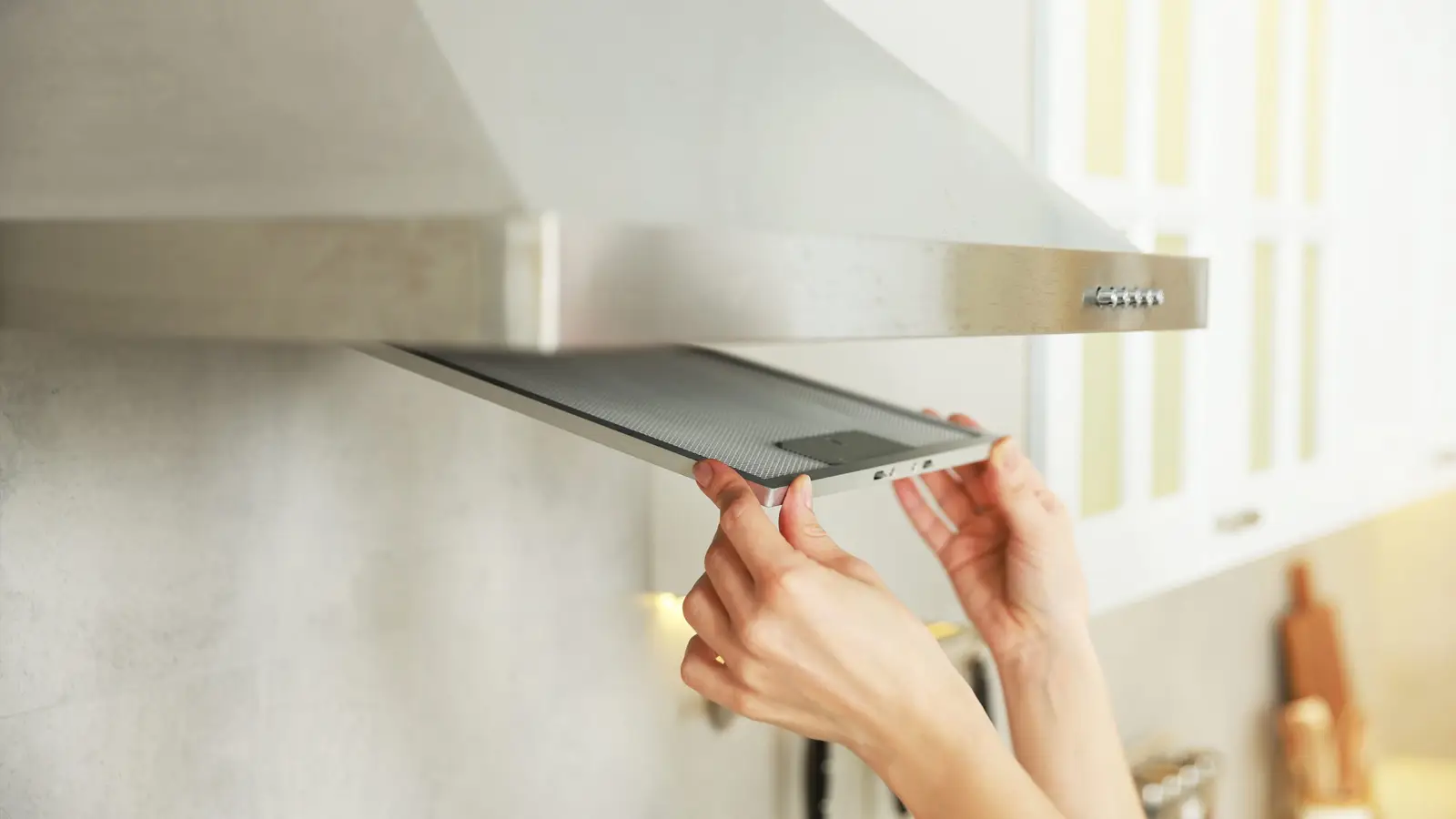
- Remove and inspect the grease filters. Slide or unclip them out. If they feel heavy and sticky, that is your culprit.
- Degrease them thoroughly. Soak in hot water with washing-up liquid, or run them through the dishwasher if they are suitable. Our guide on whether cooker hood filters are dishwasher safe explains which can and cannot go in.
- Clean the canopy and filter housing. Wipe down the underside of the hood and the recess the filters sit in, since grease collects there too.
- Check the carbon filter if you recirculate. Replace it if it is overdue, as a blocked one chokes airflow.
- Refit the filters correctly. Make sure each one is seated firmly and the right way round, with no gaps.
- Review how you run the hood. Switch it on before you start cooking, use a higher speed when frying, and leave it running for ten to fifteen minutes afterwards.
- If it persists, look at fitting and ducting. Check the mounting height, the duct run, and whether the hood is powerful enough for your kitchen.
Top tip: Cooking on the back burners, using pan lids, and keeping the heat sensible all cut the amount of grease vapour reaching the hood in the first place. Less grease in means less grease to drip out.
How Often Should You Clean Cooker Hood Filters?
Cleaning frequency depends on how much you cook and how often you fry. Use the guide below as a sensible starting point, and clean sooner if the filters look or feel greasy.
| How you cook | Clean grease filters | Replace carbon filters |
|---|---|---|
| Light use, mostly boiling and steaming | Every 2 to 3 months | Every 6 months |
| Everyday use, some frying | Monthly | Every 3 to 4 months |
| Heavy use, frequent frying | Every 2 to 4 weeks | Every 2 to 3 months |
Carbon filter intervals are a general guide only, since they vary by model. Always check the figure in your appliance manual, and remember that carbon filters are replaced rather than washed.
Is Grease Dripping From a Cooker Hood Dangerous?
It is mostly a nuisance, but it is not something to ignore. Built-up grease is flammable, and a heavy layer on the filters, canopy and ducting sits directly above an open heat source. Keeping the hood clean removes that fuel and is the single most effective thing you can do to reduce the risk.
Safety reminder: Never run a hood with grease actively dripping onto a lit hob, and never let filters become so clogged that grease coats the inside of the unit. Fire services highlight grease accumulation in extraction systems as a real fire hazard. For more, see this fire service guidance on kitchen ventilation.
Cause and Fix at a Glance
| Likely cause | Tell-tale sign | What to do |
|---|---|---|
| Saturated grease filters | Heavy, sticky filters; drips after cooking | Degrease or replace the filters |
| Filter fitted wrong | Visible gaps; grease around the edges | Reseat the filter correctly |
| Hood run too low or briefly | Steam and grease linger while cooking | Use a higher speed and run it longer |
| Mounted too high or underpowered | Greasy film spreads across the hob area | Check height and extraction rate |
| Condensation mixing with grease | Watery, oily drips, worse in winter | Improve ventilation; check the duct run |
| Interior or ducting greased up | Drips continue after a filter clean | Deep clean the canopy and ducting |
Keep your cooker hood working at its best
Most grease problems come down to maintenance and the right hood for your kitchen. These guides will help you stay on top of both.
- Follow the full method in our grease filter cleaning and replacement guide
- Diagnose other faults with common cooker hood problems and how to fix them
- Browse the full CATA cooker hood range if an upgrade is on the cards
When to Replace Filters, or Upgrade the Hood
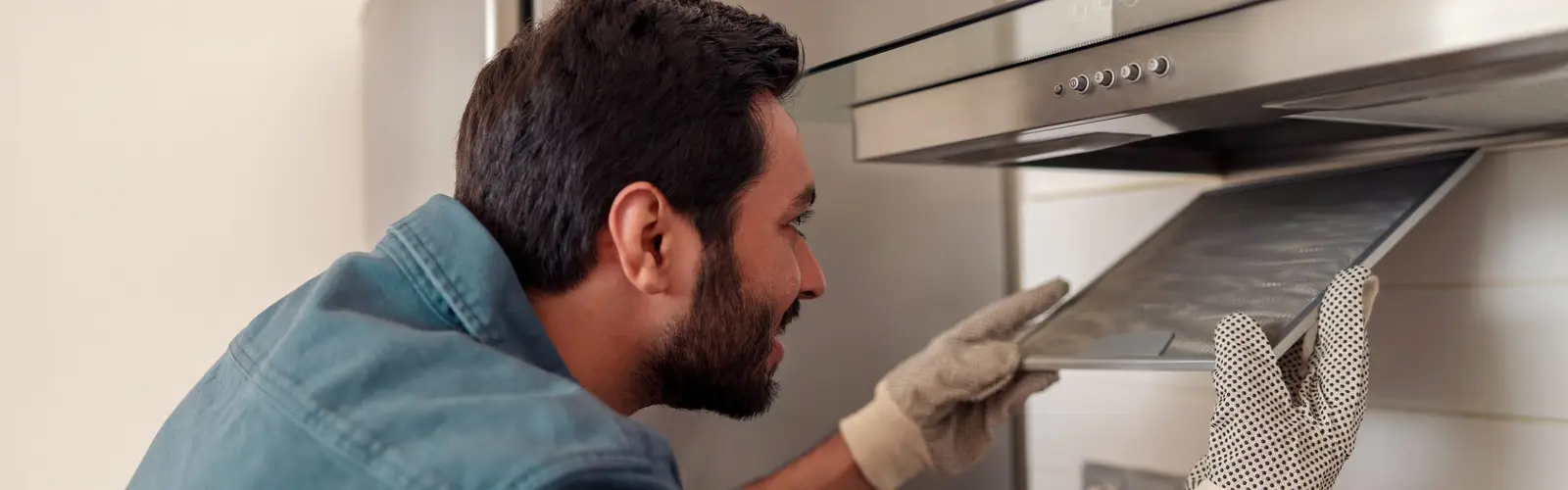
Sometimes cleaning is not enough. Replace baffle or mesh filtersBaffle filters are solid metal channels that trap grease and are easy to wash; mesh filters are layered metal gauze. Both wear out over time and lose efficiency. if they are bent, corroded, or no longer trap grease properly even after a good clean. Carbon filters are always replaced, never washed.
If the dripping keeps returning despite clean filters and good habits, the issue may be the hood itself. A unit that is mounted too high, sized for a smaller kitchen, or simply old and underpowered will struggle to capture grease. Checking the correct installation height above the hob is a good first move, and if the hood is genuinely too weak for the room, comparing the recommended extraction rates for cooker hoods will tell you whether an upgrade is worthwhile.
Frequently Asked Questions
If a clean did not stop it, grease has most likely built up inside the canopy, fan housing or ducting, or the filters are worn and no longer trapping oil. Deep clean the interior, check the filters are seated correctly, and replace any that are damaged. Persistent dripping can also point to the hood being mounted too high or being underpowered for the kitchen.
For everyday cooking with some frying, monthly is a good rule. Light users can stretch to every two or three months, while heavy frying may need a clean every two to four weeks. If filters feel sticky or heavy, clean them sooner regardless of the calendar.
Many metal grease filters are dishwasher safe, but some finishes can discolour, and carbon filters must never go in. Check your manual first. A hot soak with washing-up liquid is a reliable alternative when you are unsure.
Grease itself is flammable, and a heavy build-up sitting above a hob is a recognised fire hazard. It is rarely an emergency in a domestic kitchen, but it is a clear sign the hood needs cleaning. Keeping filters and the interior degreased is the best way to keep the risk low.
They can seem to, because a clogged carbon filter reduces airflow and lets grease linger. The grease filter still does the actual oil-trapping in both setups, so regular grease filter cleaning matters either way. Replacing carbon filters on schedule keeps a recirculating hood working properly.
It is possible. A hood that is too narrow for the hob, mounted too high, or rated for a smaller room will struggle to capture grease, which then escapes and drips. If cleaning and good habits do not solve it, checking the fitting height and extraction rate is the next step.
Final Verdict
Grease dripping from a cooker hood is almost always a maintenance issue, and almost always fixable. Saturated filters are the usual cause, so start there.
- Clean the grease filters first; this fixes most cases.
- Clean the canopy and ducting if dripping continues.
- Run the hood on a higher speed and leave it on after cooking.
- Check the fitting height and extraction rate if the problem persists.
- Keep on top of it, because grease build-up is a fire risk.