Waiting for an oven to reach temperature is one of the few genuinely dull parts of cooking. There are real ways to shorten or avoid it, and there are myths that either make no difference or actively produce worse results. Here is the honest verdict on each.
Use Rapid Preheat or Fast Heat function if your oven has it
Works
Rapid Preheat activates all heating elements simultaneously (top, bottom, and fan) to reach the set temperature faster than a standard preheat. On most ovens it cuts preheat time by 30 to 50 percent. Switch to the correct cooking function once the oven signals it has reached temperature. Do not cook on Rapid Preheat itself. It is a heating shortcut, not a cooking mode.
Place empty baking trays or a baking stone inside while preheating
Works
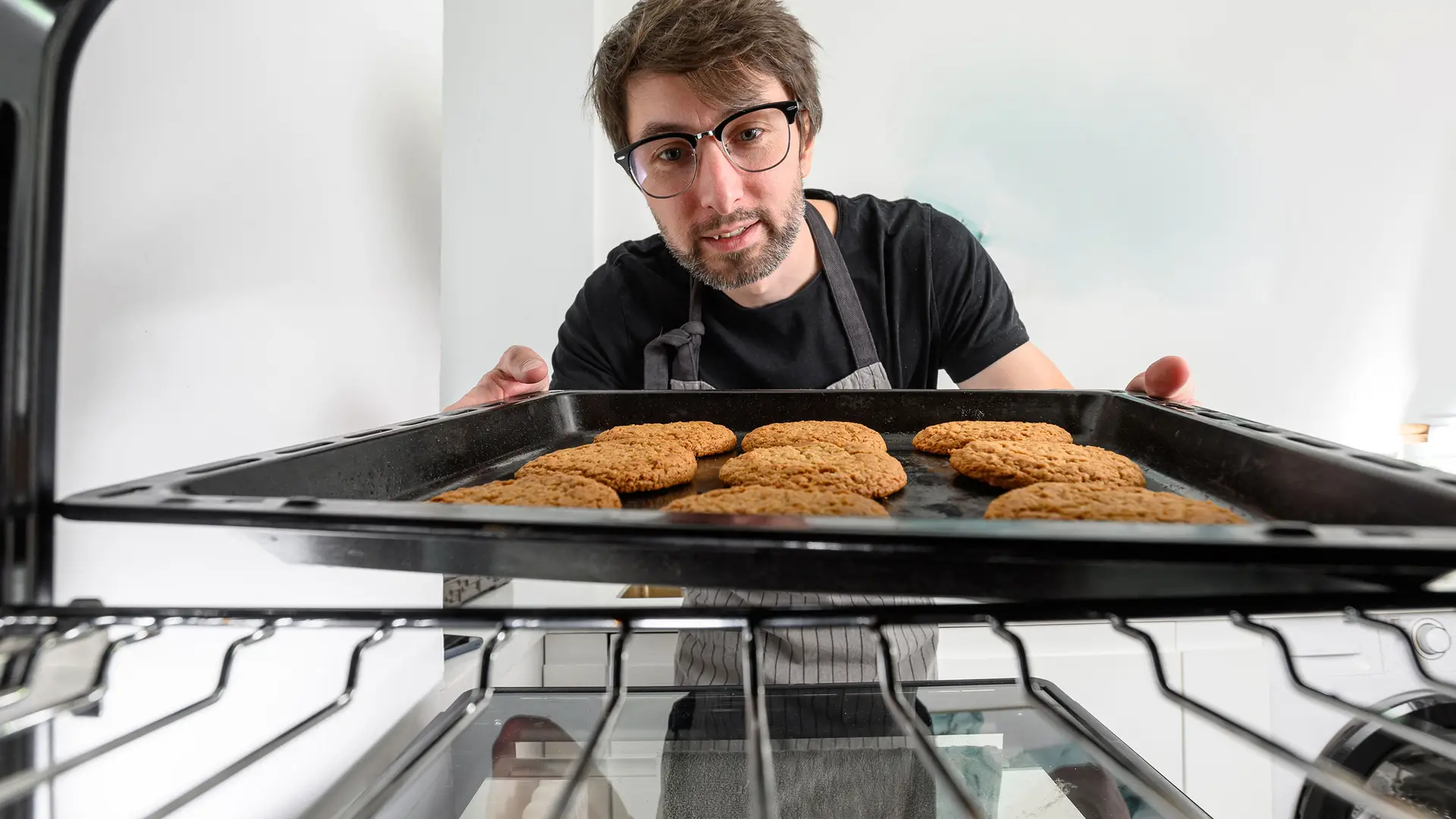
A cold baking tray placed in a preheated oven takes several minutes to reach the oven temperature, during which food placed on it cooks unevenly from below. Heating the tray with the oven means food contacts a hot surface immediately, producing a better base crust on pastry, a crispier bottom on pizza, and better browning on roasted vegetables. It does not shorten preheat time, but it uses it productively.
Keep the door closed until the oven signals it has reached temperature
Works
Opening the door during preheat drops the cavity temperature by 20 to 30°C and the oven must reheat. On a fully preheated oven, door openings during cooking cause the same drop and take 2 to 3 minutes to recover. The oven light and door glass exist precisely so you can check progress without opening. Use them.
Turn the temperature higher to reach target temperature faster
Doesn’t work
Modern ovens have a thermal sensor that cuts the heating elements when the set temperature is reached. Setting 240°C when you want 200°C does not make the oven heat faster to 200°C. It heats at the same rate but continues past 200°C to 240°C. You then have to wait for it to cool back down before cooking, or cook at the wrong temperature. The original’s claim that “the sensor prevents overheating” is partially correct but misses this: you will overshoot your target, not just reach it faster.
Start cooking before the preheat is complete to “save time”
Doesn’t work
Loading food into an underheated oven does not save time overall. It changes how the food cooks, producing different (usually worse) results. Bread and pastry that enter a cold or underhot oven expand slowly rather than setting a crust quickly. Cakes may not rise correctly. Meats may produce more moisture before browning. The oven’s preheat time is part of the recipe’s total time, not wasted time before it starts.
Skip preheating entirely for certain dishes
Depends on the dish
For slow braises, casseroles, and dense roasts that cook for an hour or more, the first few minutes in a cold-starting oven make negligible difference to the final result. You can load and start simultaneously. For baked goods (cakes, bread, pastry, biscuits), pies, and anything where a rapid initial heat affects texture or rise, preheating is not optional. The rule of thumb: if the dish can afford an extra 10 minutes of gentle cooking at the start, skip the preheat. If precision matters, do not skip it.
Reduce temperature by 20°C when using fan instead of conventional
Works — and saves time
Fan ovens circulate air continuously, transferring heat to food faster and more evenly than a still conventional oven. The convention of reducing the recipe temperature by 20°C compensates for this. The side effect is that fan ovens also preheat faster and reach stable cooking temperature more quickly. This is a genuine shortcut that most people already have available and underuse. If your recipe says 200°C conventional, try 180°C fan and reduce cooking time slightly.
Preheating uses roughly 10 to 15 percent of total oven energy for a typical cooking session. Skipping it where appropriate is a legitimate energy saving, not a meaningful compromise. For longer sessions involving multiple dishes, preheat once and use the oven continuously rather than switching off and reheating between dishes.