Home » Oven Guides & Advice » How to use residual oven heat to save energy
How to Use Residual Oven Heat to Save Energy
The simplest way to use residual oven heat is to switch the oven off a few minutes before your dish is due to finish and let the stored heat complete the cooking. A modern, well-insulated oven holds its temperature for a surprisingly long time after switch-off, so those final minutes often need no active power at all. Keep the door closed, and you can put that leftover warmth to good use too.
Quick answer
For most bakes and roasts that run 30 minutes or longer, switching off 5 to 10 minutes before the end lets retained heat finish the job with no loss of quality. Keep the door shut so the heat stays in, and use the oven light and glass door to check progress. You can also use the cooling oven to warm plates or finish a side dish. For holding a cooked meal at a safe, gentle temperature afterwards, see our guide on the oven temperature to keep food warm.
What Is Residual Oven Heat?
Residual heatThe warmth an oven retains after it is switched off, stored in the cavity, shelves and food, which keeps cooking for a time. is the warmth your oven keeps after you switch it off. The cavity, the shelves and the food itself have all absorbed energy, and that heat does not vanish the moment the power stops. In a well-insulated oven with a good door seal, the temperature falls only gradually, often staying hot enough to keep cooking for ten minutes or more.
Using that stored heat, rather than paying to generate fresh heat, is where the saving comes from. There is a related effect called carryover cookingWhere food keeps cooking from its own retained heat after it leaves the oven, which is why roasts are rested before carving., where food continues to cook from its own retained heat even after it leaves the oven. It is the reason a roast keeps rising in temperature while it rests.
How Much Energy Can It Save?
Ovens are among the more energy-hungry appliances in the kitchen, so trimming even the last few minutes off every cooking cycle adds up over a week of meals. The exact saving depends on your oven, how long you cook, and how often you do it, so it is more of a steady trickle than a single dramatic cut.
The principle is simple: every minute the element is off but the oven is still doing useful work is a minute you are not paying for. Combined with not over-preheating and avoiding unnecessary door openings, it is a small habit that quietly lowers your running costs. For a fuller picture of what your appliances cost to run, see our guide to how much electricity kitchen appliances use.
How to Use Residual Heat, Step by Step
- Switch off early. On anything cooking for 30 minutes or more, turn the oven off 5 to 10 minutes before the recommended end time.
- Leave the dish inside with the door closed so the trapped heat keeps working on the food.
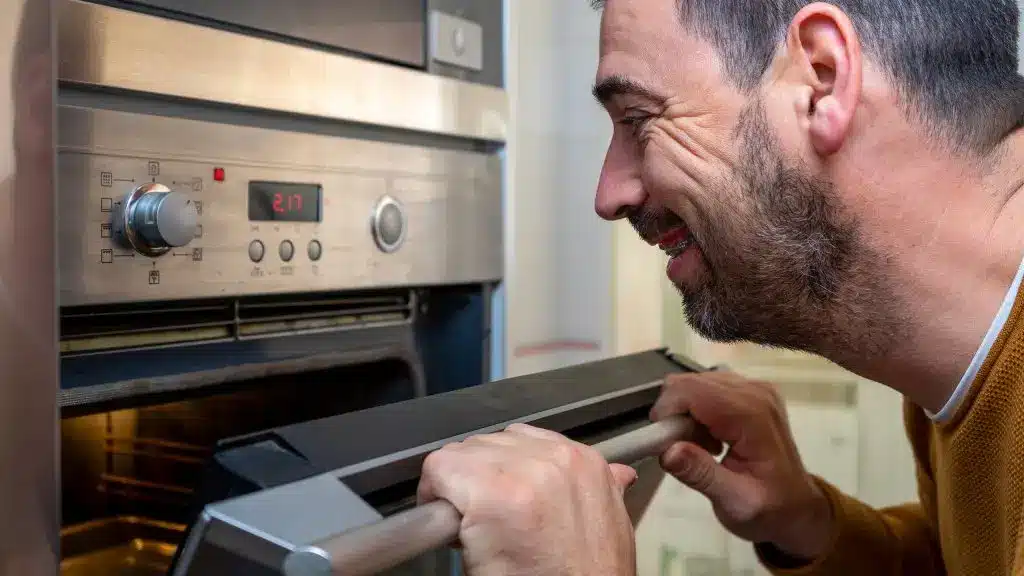
- Check without opening. Use the oven light and the glass door rather than opening up and letting the heat escape.
- Rest your roasts. Lift meat out to rest under foil; it carries on cooking from its own heat and slices better for it.
- Turn off at the wall when you are finished, rather than leaving the oven drawing standby power.
Which Dishes Suit Residual Heat, and Which Do Not
Residual heat is brilliant for forgiving dishes and for anything that benefits from a gentle finish. It is less reliable where the final few minutes are make-or-break.
Great for residual heat
- Roasts, which then rest and finish
- Casseroles, stews and braises
- Jacket and roast potatoes
- Gratins and traybakes
- Reheating and anything nearly done
Be cautious with
- Souffles and other delicate rises
- Pastry needing a strong final blast
- Bread that relies on a hot finish for crust
- Dishes where exact end temperature is critical
- Large joints, until you confirm they are safely cooked
Put the Leftover Heat to Work
The warmth in a cooling oven does not have to go to waste. While it is still gently hot, it can take on a second job.
- Warm plates and serving dishes ready for the table.
- Finish or hold a side dish while the rest of the meal comes together.
- Prove bread dough once the oven has cooled to just lukewarm.
- Warm bread rolls or crisp up leftovers for a minute or two.
- Dry fresh herbs in the gentle residual warmth.
Small Habits That Make Residual Heat Work Harder
A few easy habits help the stored heat do more, and stop it leaking away before it can.
- Do not over-preheat. Many dishes need far less preheating than people assume. Our guide on whether you can leave oven trays inside while preheating covers this.
- Keep the door closed. Every opening lets a rush of heat escape and undoes the saving.
- Check the door seal. A worn seal leaks heat and undermines the whole approach. Here is how to tell if your oven seal needs replacing.
- Use the fan setting. Fan ovens spread heat efficiently and often cook at slightly lower temperatures. See how a fan oven works.
- Batch cook. If the oven is on, fill it. The Energy Saving Trust lists batch cooking among its top tips to save energy in the kitchen, and a full Sunday roast is a perfect chance to cook several things at once.
A Quick Word on Food Safety
Important: Residual heat is for finishing food that is already almost done, not for slow-holding raw or part-cooked food. Always make sure meat, poultry and fish reach a safe internal temperature before serving, and a food thermometer takes the guesswork out. If you want to keep a cooked meal warm to serve later, use a deliberate low setting rather than a cooling oven, as explained in our keep food warm guide.
Residual Heat at a Glance
| Action | What to do | Why it helps |
|---|---|---|
| Switch off early | Turn off 5 to 10 minutes before the end on longer cooks | Stored heat finishes cooking at no extra cost |
| Keep the door shut | Check using the light and glass door | Stops the retained heat escaping |
| Rest roasts | Remove and cover the meat to rest | Carryover heat finishes it and improves texture |
| Reuse the warmth | Warm plates, prove dough, crisp leftovers | A second job from heat you have already paid for |
| Mind the seal | Replace a worn door seal | Keeps the heat in where it belongs |
Cut your kitchen running costs further
Residual heat is one habit among many. These guides help you get more from your oven and the rest of your kitchen.
- See what everything costs with how much electricity kitchen appliances use
- Stop silent waste with our guide to standby power consumption and how to cut it down
- Browse efficient models in the CATA oven range
Frequently Asked Questions
Yes. The oven keeps generating useful heat for several minutes after the element switches off, so those final minutes finish the food without drawing power. On its own the saving is small, but repeated across every meal, and combined with sensible preheating, it adds up over time.
It varies with the oven and how hot it was, but a well-insulated oven with a good door seal will often hold a useful cooking temperature for ten to fifteen minutes, then stay warm enough to keep plates or finish a side dish for a good while longer. Keeping the door closed makes a big difference.
Forgiving dishes work best: roasts that go on to rest, casseroles, stews, jacket potatoes, gratins and traybakes, and anything you are simply reheating. Be more careful with delicate bakes that need a precise final blast, such as souffles, some pastries and crusty bread.
It can be, as long as the meat reaches a safe internal temperature before you serve it. Residual heat is best for the last stretch of cooking and for resting, not for taking raw meat most of the way. A food thermometer is the reliable way to confirm it is properly cooked.
Yes. Opening the door lets a surge of hot air out and drops the temperature noticeably, so the oven has to work harder to recover. Checking through the glass with the internal light on keeps the heat where you want it, which matters even more when you are relying on residual heat.
Fan ovens distribute heat more evenly and often cook at slightly lower temperatures, which makes them efficient to begin with. The fan itself stops with the power, but the stored heat in the cavity still works for you. A good door seal matters more than the oven type for how long the warmth lasts.
Final Verdict
Using residual oven heat is one of the easiest energy habits to pick up, and it costs nothing to start. Switch off a little early, keep the door shut, and let the stored warmth do the rest.
- Turn the oven off 5 to 10 minutes before the end on longer cooks.
- Keep the door closed and check through the glass.
- Rest roasts so carryover heat can finish them.
- Reuse the warm oven for plates, dough or leftovers.
- Always confirm meat is safely cooked before serving.
Explore More Kitchen Advice & Buying Guides
Browse our latest articles covering appliance tips, energy-saving advice, and expert guidance – designed to help you choose, use, and get the most from your kitchen appliances.