Induction Hob Converter Plates: Do They Work and Are They Safe?
Induction hob converter plates do work, in the sense that they let aluminium, copper and glass pans heat up on an induction zone. They do it by turning that zone into a hot plate, which makes cooking slower, uses roughly twice the energy and leaves a very hot disc on your hob with no warning that it is hot. We don't recommend them, and this guide explains why.
Converter plates heat non-induction pans, but they lose the speed, control and cool surface that make induction worth having. They create a real burn risk, concentrate heat on one patch of glass that can crack the hob, and can trigger overheating cut outs. Induction compatible pans are the safer, cheaper choice in the long run.
What is an induction converter plate?
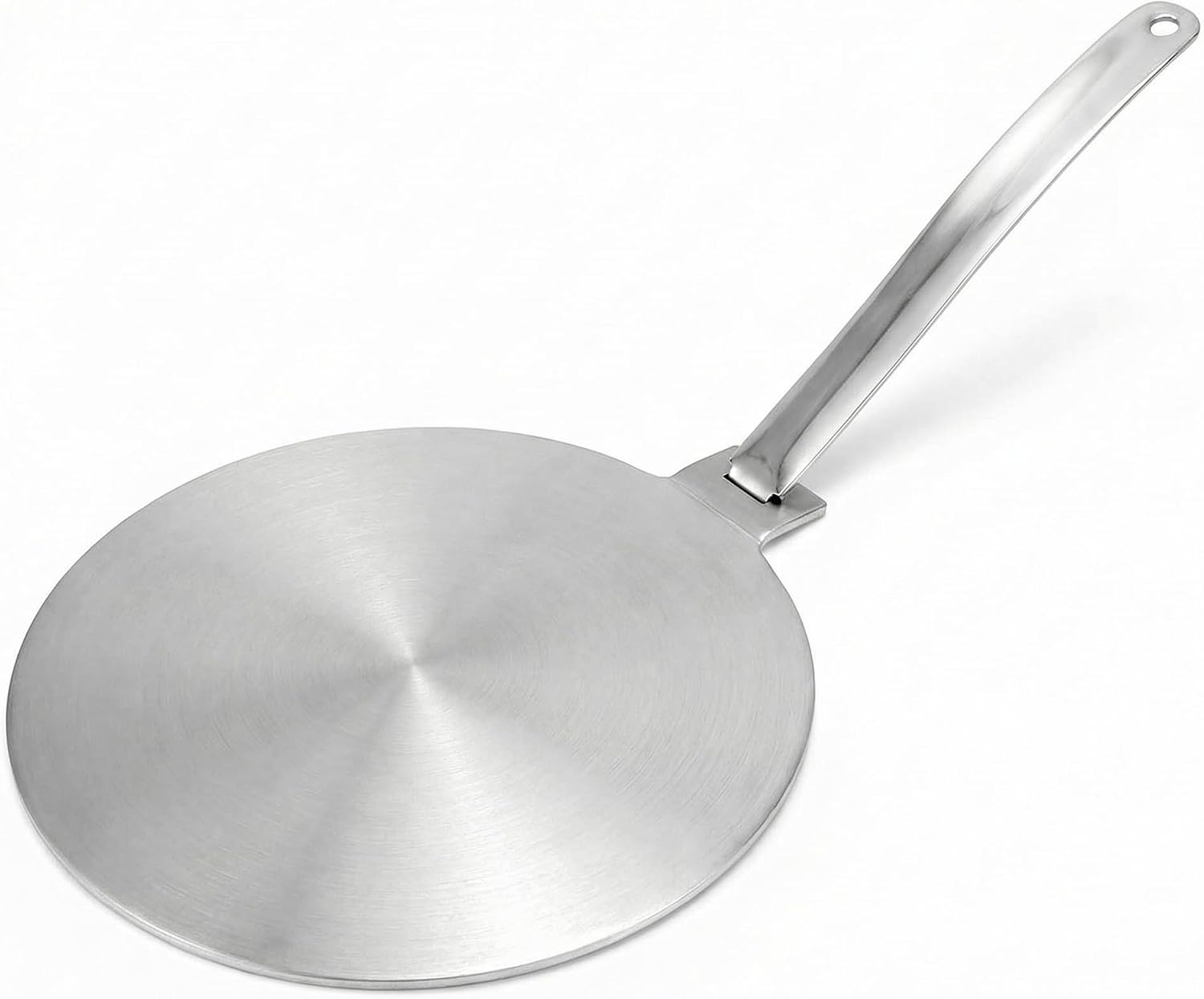
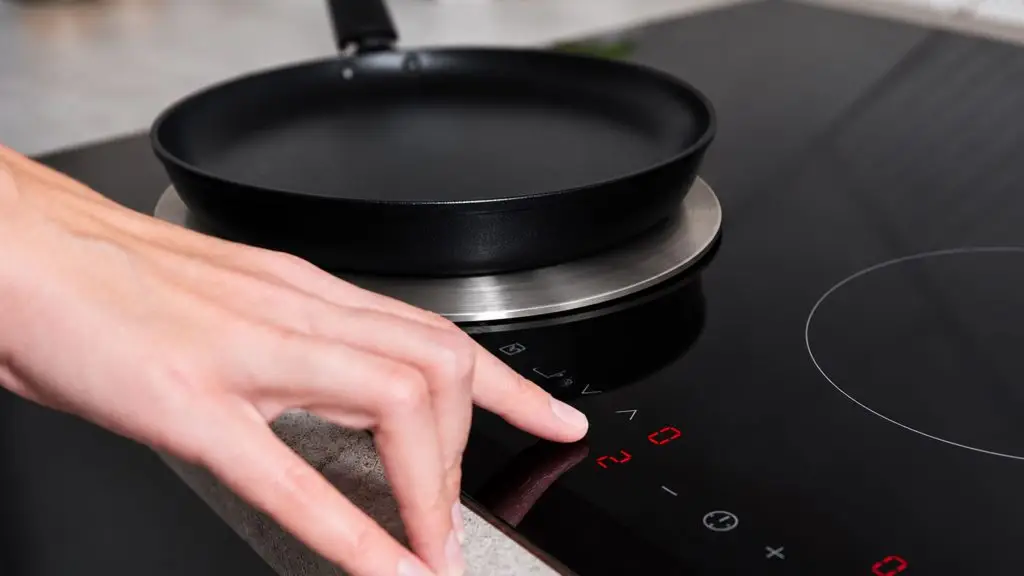
An induction converter plate, also sold as an adapter plate, interface disc, heat diffuser or induction disc, is a flat disc of magnetic metal, usually stainless steel and sometimes layered with aluminium. You place it on an induction zone and stand a pan that would not normally work on induction on top.
An induction hob does not heat up by itself. Copper coils under the glass create a magnetic field, and that field generates heat directly in the base of a magnetic pan. A converter plate is magnetic, so the hob heats the plate instead, and the plate passes that heat up into your pan by contact. In effect, your induction zone becomes an old style hot plate. If you want the full picture of why some pans don't respond at all, read what happens if you use a non induction compatible pan.
Induction panHeat made in the pan
Heat made inThe pan base
Hob glassWarm from the pan only
Reaching foodAlmost all of it
Converter plateHeat made in the plate
Heat made inThe converter plate
Hob glassHot spot under the plate
Reaching foodFar less, the rest is lost
Heat builds up in the plate faster than it can pass into the pan, so much of it flows down into the glass and out from the exposed edge.
Why we don't recommend converter plates
Converter plates give up almost everything that makes induction worth choosing: speed, efficiency, precise control and a surface that stays relatively cool around the pan. They also put the hob itself under stress it was not designed for. These are the six main drawbacks.
1. A serious burn risk
A converter plate gets far hotter than an induction pan and stays hot long after you switch off. Your hob shows a residual heat indicator for the glass, but the plate itself has no warning of any kind. It looks exactly the same hot or cold, so there is no way to tell by looking when it has cooled down. That is a real hazard in a busy kitchen.
- ChildrenA child could touch or pick up a plate that looks cold and suffer a serious burn. A child lock stops the controls being used, but it does nothing to cool a hot plate.
- Vulnerable adultsAnyone with limited mobility, reduced feeling in their hands, poor eyesight or memory difficulties is more likely to touch or handle a hot plate.
- Worktops and surfacesSomeone may lift the plate off and put it down on a worktop, chopping board, tablecloth or plastic surface, causing scorching, melting or even a fire risk.
- Exposed hot metalIf the plate is wider than the pan, a ring of very hot metal is left uncovered, ready to catch hands, sleeves or tea towels.
2. Risk of cracking the hob glass
With an induction pan, heat is made in the pan and the glass only warms from contact. A converter plate receives heat faster than it can pass it into the pan, so heat builds up and flows back down into one area of glass.
That intense, localised heat puts the glass under stress it was not designed for and increases the chance of cracking. A cracked hob must not be used until it has been repaired.
3. Overheating cut outs and strain on electronics
The heat also reaches the electronics under the glass. Induction hobs protect themselves, so expect zones to reduce power, show an overheating code or switch off. Repeated high temperatures put long term strain on the components. Our guide to why an induction hob keeps switching off mid cook covers this in more detail.
4. Wasted energy and slower cooking
Heat has to travel through an extra layer, so much of it is lost to the air and the hob surface. A large plate under a small pan wastes even more, because the whole plate heats up but only the area under the pan does any cooking. See the test results below.
5. Less control
Induction responds almost instantly: turn the power down and the pan stops heating straight away. A converter plate stores a lot of heat, so it keeps cooking after you turn down and is slow to respond when you turn up, which makes delicate sauces and quick searing harder.
6. Scratches, marks and pan detection problems
Many plates are heavy with a rough underside that can scratch the glass if slid across it, and very high temperatures can mark or discolour the surface. A plate that is smaller than the zone, warped or off centre may not be detected reliably, so the zone can flash, beep or switch off. Lower powered plug in induction hobs struggle even more.
How much energy does a converter plate waste?
An independent test by Century Life heated the same amount of water, about 1.9 litres, in two identical pots on two identical induction cookers set to around 1,500 W. One pot sat directly on the hob; the other sat on a converter disc.
Independent boil test results
1.875 kg of water, identical pots and cookersTime to heat
Energy used
The pot on the converter disc never reached a rolling boil. At around 10 and a half minutes the cooker began throttling its power from about 1,500 W to 1,200 W, most likely because it was overheating, and the test was stopped at about 19 minutes to avoid damaging the cooker. That is exactly the kind of protective cut back you can expect on a domestic hob.
Those costs are based on the Ofgem energy price cap average electricity rate of 26.32p per kWh for Direct Debit customers from 1 October to 31 December 2026. A few pence per use sounds small, but it adds up over every meal, and it cancels out one of the main reasons for choosing induction in the first place. For a wider comparison, see our guide to the cheapest hob to run.
Converter plate vs induction pan at a glance
| Feature | Old pan on a converter plate | Induction compatible pan |
|---|---|---|
| Heating speed | Slow, heat passes through an extra layer | Fast, the pan heats directly |
| Energy use | Higher, heat is lost to the hob and the air | Lower, most of the energy goes into the pan |
| Temperature control | Slow to respond | Almost instant |
| Heat on the glass | Very hot under the plate | Warm from the pan only |
| Burn risk | High, the plate stays very hot with no warning | Lower, the surface around the pan stays relatively cool |
| Risk to the hob | Localised overheating, cracked glass, cut outs and scratching | Low when used as directed |
| Upfront cost | Low | Higher if replacing a full set |
When might people use a converter plate?
The usual reason is a single treasured piece that has no induction version, such as a copper pan, a glass coffee maker or an aluminium stovetop espresso pot. If you are tempted, treat the plate as a hot plate that gives no warning, and follow these rules every time.
If you do use a converter plate
- Check your hob's user manual first, as some manufacturers advise against them.
- Choose a plate no wider than the base of the pan, and centre it on the zone.
- Never use it on boost or the highest power settings.
- Never leave it unattended, and keep children and vulnerable people away.
- Lift it, never slide it, to protect the glass.
- Leave it on the hob until it has fully cooled rather than moving it to another surface.
Our advice stays the same, though: for everyday cooking, switch to induction ready cookware.
Will your existing pans work on induction?
You may need to replace fewer pans than you think. Pick the material of a pan you own to see whether it is likely to work.
Pan checker
Choose a material, then confirm with a fridge magnet on the base.
The fridge magnet test is the quickest check: if a magnet sticks firmly to the base, the pan will work on induction. Our full guide to the magnet test explains how to read a weak or partial result. Many pans also carry an induction symbol, which looks like a coil, on the base or the packaging.
Better alternatives to a converter plate
Test the pans you already have
Run the magnet test on every pan before you buy anything. Most cast iron, enamelled cast iron, carbon steel and many stainless steel pans pass, so your cupboard may already hold more induction cookware than you expect.
Replace the pans you use most
Start with the two or three pans you reach for every day, such as a saucepan, a frying pan and a stockpot. Choose a heavy, flat base with a bonded or encapsulated magnetic layer, and look for cookware labelled for all hob types so it will still suit you if you ever change hob. Our guide to the best cookware materials for induction explains what to look for.
Add cast iron for searing and griddling
Cast iron is naturally magnetic and holds heat well, which makes it ideal for steaks, vegetables and toasties. A cast iron griddle or skillet is an affordable first addition. Read how to use cast iron pans on an induction hob to protect the glass while you cook.
Choose the right hob for your cookware
If you are not ready to replace your pans, induction may not be the right hob for you yet. A ceramic hob works with any flat bottomed pan, including aluminium and copper. Compare the options in induction vs ceramic vs gas hobs, or browse the CATA range of induction hobs.
Good to know: induction is one of the safest ways to cook precisely because the area around the pan stays relatively cool and the zone stops heating the moment the pan is lifted. A converter plate takes both of those benefits away, which is why the right pan is always the better fix.
Frequently asked questions
They do heat non-induction pans, but slowly and inefficiently. The plate acts like a hot plate, so you lose the speed, control and efficiency of induction, and the extra heat on the glass can cause your hob to cut out.
It can. A converter plate concentrates intense heat on one area of the glass, which increases the risk of the glass cracking, and puts the electronics underneath under extra heat stress. Heavy plates can also scratch the glass if they are slid across it.
Usually because the hob's overheating protection is doing its job. The plate holds so much heat that the sensors under the glass detect high temperatures and cut the power. It can also happen if the plate is smaller than the zone or not centred, so the hob does not detect it properly.
Yes. In one independent test, a pot on a converter disc used 0.41 kWh and still failed to reach a rolling boil, while an induction pot boiled the same water using 0.22 kWh. Much of the heat is lost to the air and the hob glass instead of reaching the food.
We advise against it. Boost delivers maximum power into a small area, which makes a converter plate overheat even faster. If you do use a plate, keep to low or medium settings and never leave it unattended.
You cannot tell by looking. The hob's residual heat indicator only shows that the glass is hot, not the plate, and a hot plate looks the same as a cold one. Treat it as dangerously hot for a long time after cooking, leave it where it is and keep children and vulnerable people away from it.
Hold a fridge magnet to the base. If it sticks firmly, the pan is suitable. Many pans also show an induction symbol, which looks like a coil, on the base or packaging.
Summary
Induction converter plates will heat pans that don't normally work on induction, but only by turning your hob into a slow, wasteful hot plate. The plate gets extremely hot with no warning, puts children and vulnerable adults at risk of burns, concentrates heat on the glass and can trigger cut outs or even crack the hob. In independent testing, a converter disc used nearly twice the energy and still failed to boil the water.
The better fix is simple: magnet test the pans you already own, replace the few you use every day with induction ready cookware, and keep any treasured non induction piece for occasional, supervised use only. If your cookware collection is mostly aluminium or copper, a ceramic hob may suit you better for now.
Explore CATA induction hobs